Trump Pushes Back Against Abdul El-Sayed Over Sharia Law Debate in American Courts
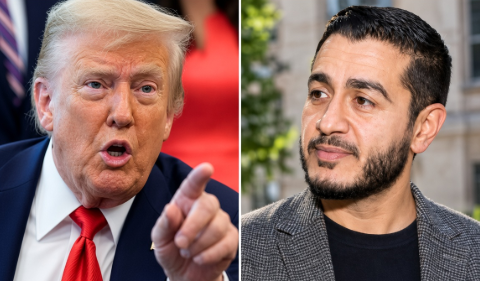
President Donald Trump has renewed his opposition to the use of Sharia law in American court proceedings following a political dispute involving Michigan politician Abdul El-Sayed.
The controversy centers on El-Sayed’s reported position that opposing Sharia law in U.S. courts is equivalent to promoting white supremacy. Trump’s response was a firm rejection of that characterization, accompanied by a renewed commitment to preventing Sharia law from influencing American judicial proceedings.
The exchange has brought renewed attention to the broader debate over religious freedom, constitutional protections and the role of religious principles in the U.S. legal system.
Trump and his supporters argue that American courts must operate exclusively under the nation’s Constitution and established laws. They maintain that protecting the independence of the American judicial system is essential to preserving equal treatment under the law.
Meanwhile, critics of efforts to prohibit Sharia law have raised concerns that broad restrictions could unfairly target Muslim communities and interfere with religious freedom. Legal experts have also distinguished between applying foreign religious law as binding authority and voluntarily using religious principles in private agreements, such as certain forms of arbitration, where permitted by law.
The debate reflects wider political disagreements over immigration, religious identity and constitutional rights.
Trump’s latest remarks reinforce his position on the issue, while the dispute with El-Sayed highlights the challenges of balancing concerns about legal authority with protections for religious expression in the United States.