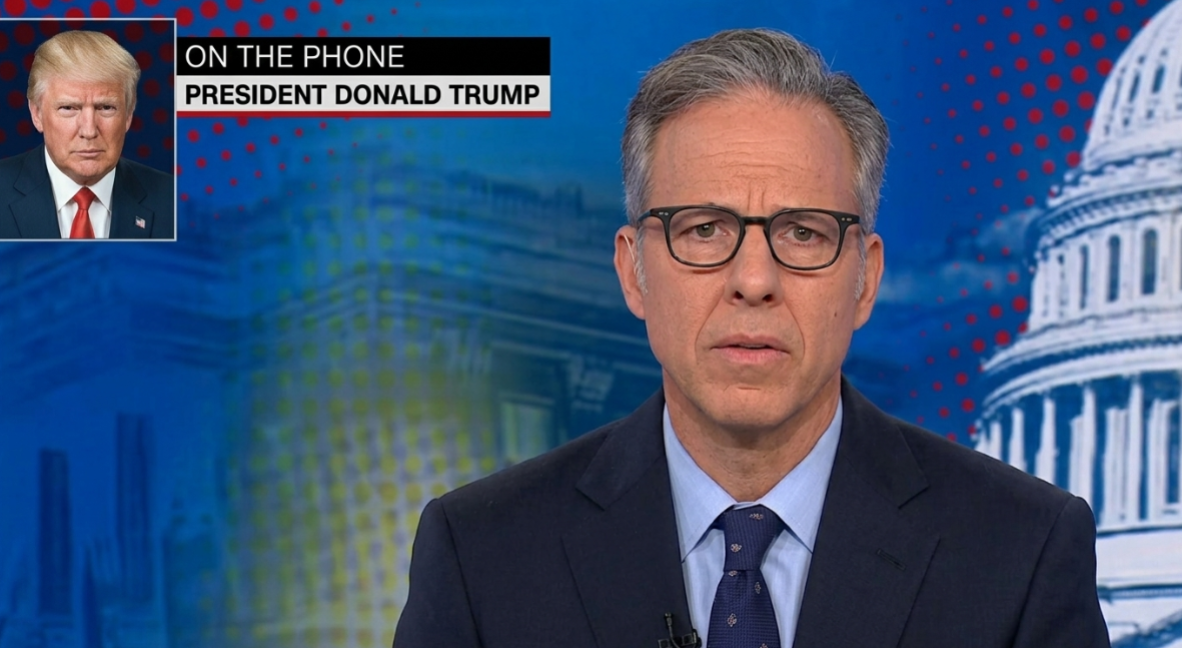
A dramatic exchange between President Donald Trump and CNN anchor Jake Tapper has ignited a fierce debate over press freedom and the relationship between the White House and the American media.
During a live CNN appearance, Trump said, “We’re trying to have CNN go on a normal path, and we’ll do that.” The remark immediately drew attention because it appeared to suggest that the administration is seeking to influence the direction of one of America’s major news networks.
Trump had called CNN to discuss the sudden passing of Senator Lindsey Graham and declined to address other issues, including questions about recent U.S. strikes on Iran. Tapper accepted those limits and thanked Trump for appearing, ending the conversation by saying that CNN would welcome him back.
The exchange quickly triggered backlash online, with critics accusing Tapper of failing to challenge the president and arguing that news organizations should remain independent from political pressure. Supporters of Trump, however, may view his comments as an attempt to push CNN toward what he considers more balanced or responsible coverage.
The controversy became even more intense because of broader concerns surrounding the media industry and political influence. CNN operates under Warner Bros. Discovery, while the company’s proposed acquisition by Paramount Skydance has attracted significant regulatory and political attention.
The incident has therefore raised a larger question: Who decides the direction of America’s news media—the government, corporate owners, journalists, or the public?
Trump’s brief comment may have lasted only seconds, but it has sparked a much bigger national conversation about presidential power, media independence, and the future of press freedom in America.
As criticism continues to spread, Americans are watching closely to see whether CNN, the White House, and other major media organizations respond.